Commercial Vehicle Safety

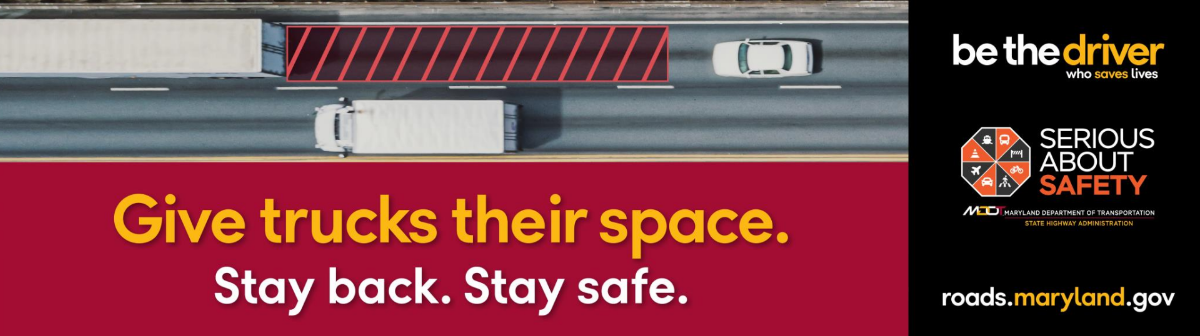
The State Highway Administration is Serious About Safety, including keeping passenger vehicle motorists safe when interacting on our roadways with commercial vehicles such as tractor trailers and buses.
In fall 2025, the agency launched an educational campaign utilizing billboards and radio advertisements geared toward passenger vehicle motorists to stress safety and prevent tragedies. In 2026, the campaign expanded to reach commercial vehicle drivers as well. Messages are conveyed at gas station pumps, social media and at Camden Yards at Baltimore Orioles games.
For Passenger Vehicle Motorists
Sharing the road with a commercial vehicle requires patience for the safety of everyone on the roadways.
Because of their weight, commercial vehicles such as tractor trailers and buses need more stopping time and distance than smaller vehicles and stopping distance increases with speed,- heavier loads or challenging road conditions.
At highway speeds it can take commercial vehicles the length of two football fields to stop, so it is imperative to never cut in front of them. If you must stop suddenly. they may not be able to stop in time and avoid hitting your vehicle.
To safely pass a commercial vehicle and merge into their lane:
- Pass on the left: Never pass a truck or bus on the right. The passenger-side blind spot is much larger on the right, making it more difficult for the driver to see you.
- Check the environment: Avoid passing on downgrades or steep hills where trucks or buses naturally pick up momentum and speed due to their heavy weight.
- Maintain visibility: Ensure you can see the truck or bus driver's face in their side mirror before initiating the pass. If you cannot see their mirror, they cannot see you.
- Signal early: Turn on your left blinker well in advance to announce your intentions clearly.
- Commit and accelerate: Move smoothly into the left lane and accelerate cleanly past the truck or bus.
- Do not linger: Avoid cruising parallel to the truck or bus. Move through the truck or bus’s "No-Zone" (blind spot) as quickly and safely as possible while obeying the speed limit.
- Use the rearview mirror rule: Wait until you can see the entire front of the truck or bus inside your rearview mirror before moving into the commercial vehicle’s lane. Using side mirrors alone can distort the actual distance.
- Signal and check: Turn on your right turn signal. Perform a quick glance over your right shoulder to verify your blind spot is completely clear.
- Leave a buffer: Merge slowly and smoothly into the lane, leaving several car lengths of space.
- Maintain your speed: Never cut in front of a heavy truck and immediately tap your brakes or drop your speed. Trucks weigh up to 80,000 pounds and cannot stop quickly if you abruptly slow down. Keep moving forward at a steady pace.
Tailgating a commercial vehicle is also incredibly dangerous because you are riding in severe blind spots ("No-Zones") where the driver cannot see you, putting yourself at high risk of fatal underride collisions if the truck or bus has to suddenly stop or if you are hit from behind.
Getting too close when a truck or bus is stopped on an upgrade is dangerous too, as the vehicle could roll back onto the passenger vehicle.
For additional Commercial Safety information, visit
Our Roads, Our SafetyⓇ | FMCSA.
Additional Be the Driver information and resources are available
here.
For Commercial Vehicle Drivers
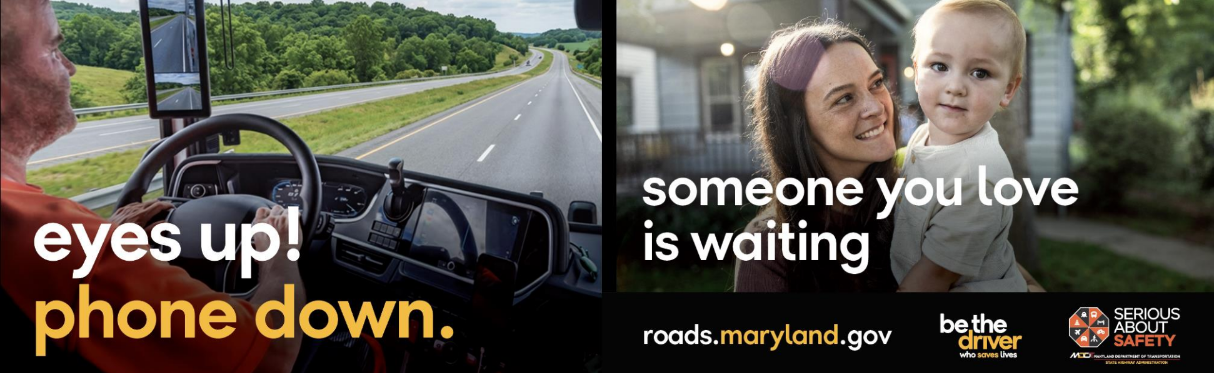
Stay focused and avoid distracted driving. Texting or using your mobile phone when driving is among the worst driving distractions. It is illegal for a commercial motor vehicle driver to text while driving, and mobile phones must be hands-free and dialed using no more than one button. Eating, drinking, interacting with a navigational device—any activity that takes your eyes and focus off the road is considered distracted driving.
Someone you love is likely waiting for you at home. Keep your eyes up and on the road and your phone down when driving.
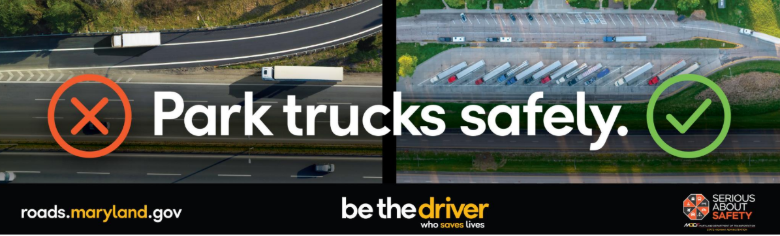
For your safety and the safety of all motorists, do not park your vehicle on the side of roadways or ramps. Use designated commercial vehicle parking lots.
Additional Resource