Work Zone Safety

The Maryland Department of Transportation State Highway Administration (SHA) is
Serious about Safety and reminds urges all motorists that Safe Actions Save Lives. When driving, biking or walking through or near work zones, your actions can mean the difference between life or death. Stay alert and avoid distractions. Motorists are also urged to always wear your seat belt, slow down and drive the posted speed limit, and move over if you can to protect our workers – and yourself. In work zones, there is little to no margin for driving error. Driving too fast, inattentively or aggressively through a roadway work zone places the lives of roadway workers at risk. At the same time, you’re also risking your life and the lives of your loved ones. One out of two people who are injured or who lose their lives in highway work zones are motorists.
Our crews are working on hundreds of projects across Maryland every day: mowing, picking up litter, repairing potholes and building/repairing roads and bridges – making our state safer and more accessible. For construction and maintenance teams, the roadway is their office, so please, drive like you or someone you love works on the side of the road.
In work zones, there is little to no margin for driving error. Driving too fast, inattentively or aggressively through a roadway work zone places the lives of roadway workers at risk. At the same time, you’re also risking your life and the lives of your loved ones.
Spring and summer are heavy roadway construction seasons and there are tools available to help you plan ahead. For a complete listing of major roadway projects in Maryland, click on
Project Portal.
To view latest traffic conditions, visit
CHART - Traveler Information.
Remember, work zone are temporary, but your actions behind the wheel can last forever!
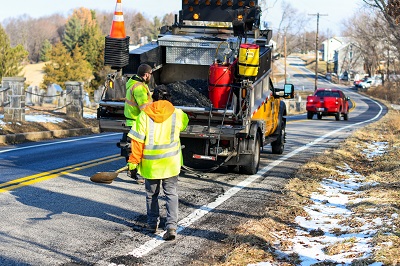
Workers filling potholes in Howard County.
SHA Commemorates National Work Zone Safety Awareness
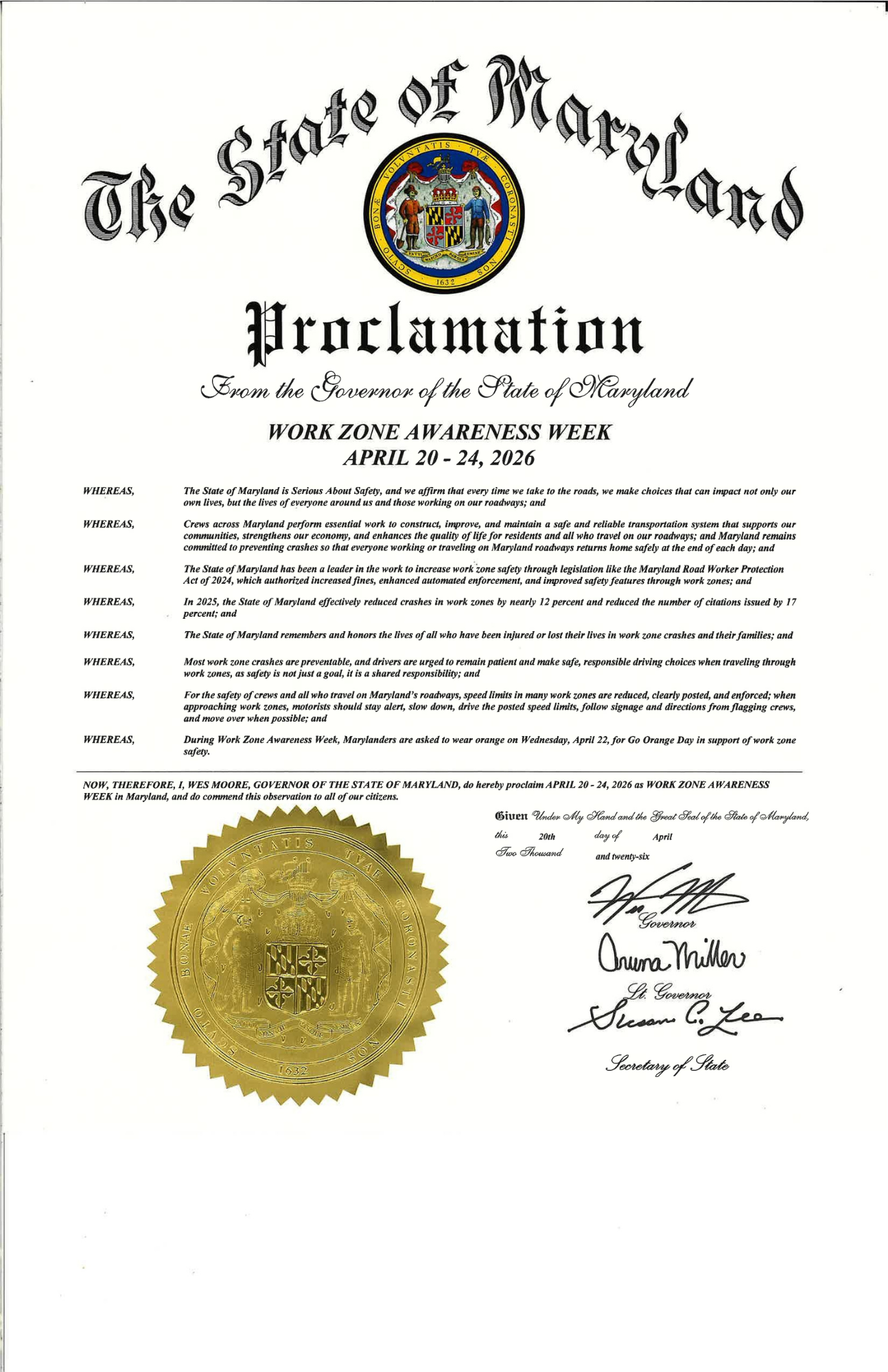
Governor Wes Moore proclaimed April 20-24 Work Zone Awareness Week in Maryland. To keep highway workers, drivers and passengers safe, SHA and Governor Moore call on all Marylanders to promote work zone safety and to follow safe driving practices in work zones. MDOT SHA joins the U.S. Department of Transportation Federal Highway Administration (FHWA) in recognizing
National Work Zone Awareness Week (NWZAW). FHWA has partnered with the American Association of State Highway and Transportation Officials (AASHTO), the American Traffic Safety Services Association (ATSSA) and state departments of transportation to coordinate and sponsor media events to bring awareness to work zone safety.
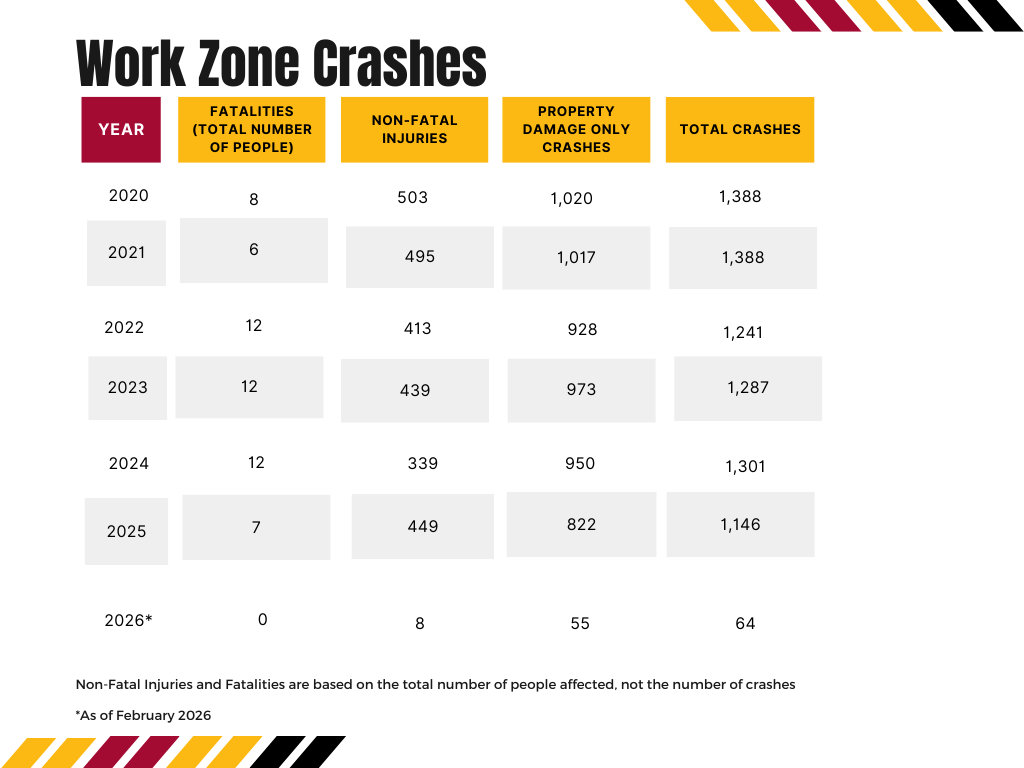
Maryland statistics on traffic crashes and fatalities.
From 2020 to 2024, Maryland reported 6,701 work zone crashes, an average of more than 1,300 work zone-related crashes each year. The crashes resulted in 2,365 injuries and 50 deaths – many suffered by vehicle drivers and passengers as well as work zone crews.
One in two killed in work zones was a motorist. One in three crashes is a rear-end collision. The leading causes of crashes were distractions, following too closely and driving too fast.
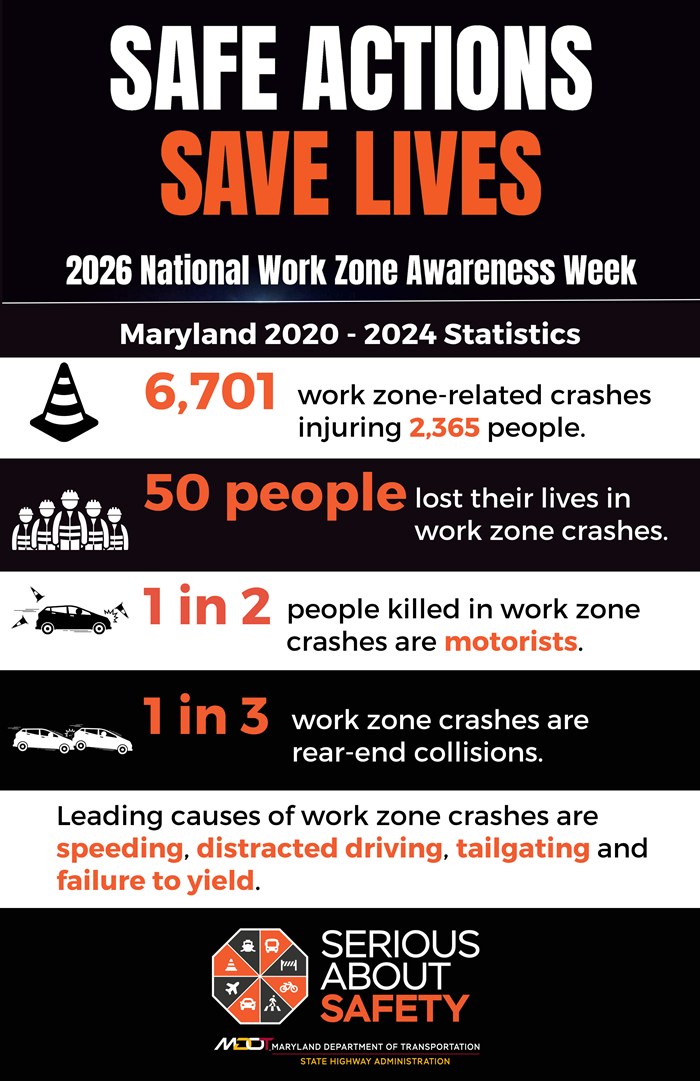
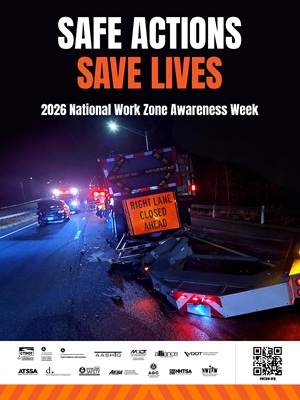
Click the image below to access the 2026 National Work Zone Safety Awareness Week poster.
FHWA resources
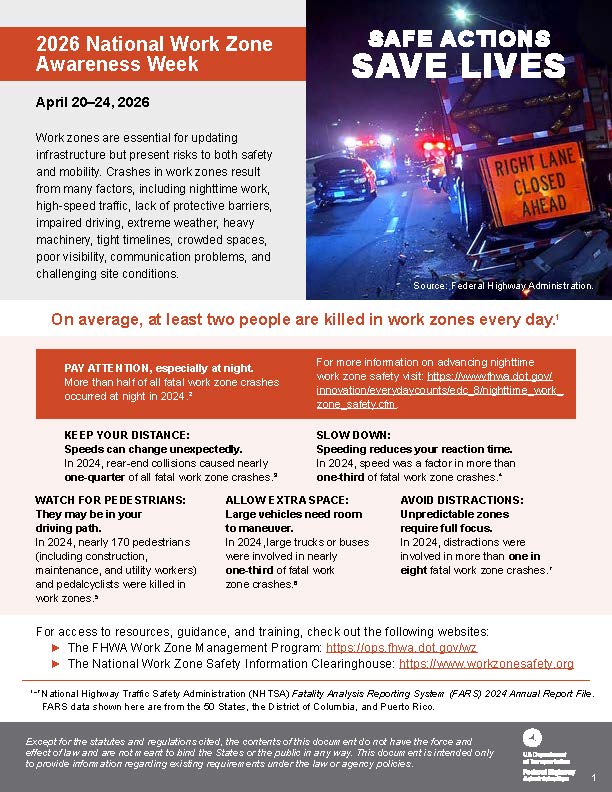
Information is at
FHWA Work Zone Awareness Week.
New legislation aimed to make work zones safer
Governor Wes Moore signed
HB513/CH17 into law on April 9, 2024. The law expanded the
Automated Speed Enforcement program, allowing more work zones to deploy speed cameras. The law also increases fines associated with speed cameras. Previously, the fine for speed cameras in Maryland was tied for the lowest across the country at $40. On June 1, 2024, the fine increased to $80, and on January 1, 2025, the fine changed to a tiered fine system:
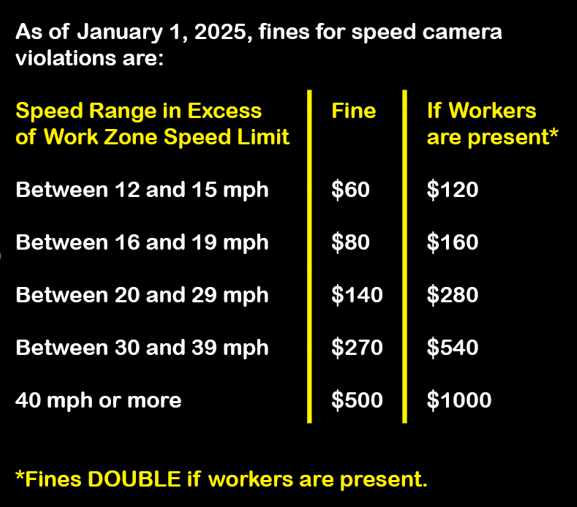
In the first two months of the new tiered fine structure in Maryland for work zone speed violations, more than 48,000 citations were issued by the Maryland Safe Zones Automated Speed Enforcement system. Those numbers include 23 citations at the $1,000 level recording a vehicle traveling more than 40 miles per hour above the posted speed in a work zone where workers were present.
By the end of 2025, there were 367,266 citations issued by the system, a decrease of 17% compared to 2024 when 443,339 citations were issued.
The good news is that no one has to receive a citation in a work zone. You just need to drive the posted speed limit. This protects highway workers, yourself, your passengers and other motorists.